
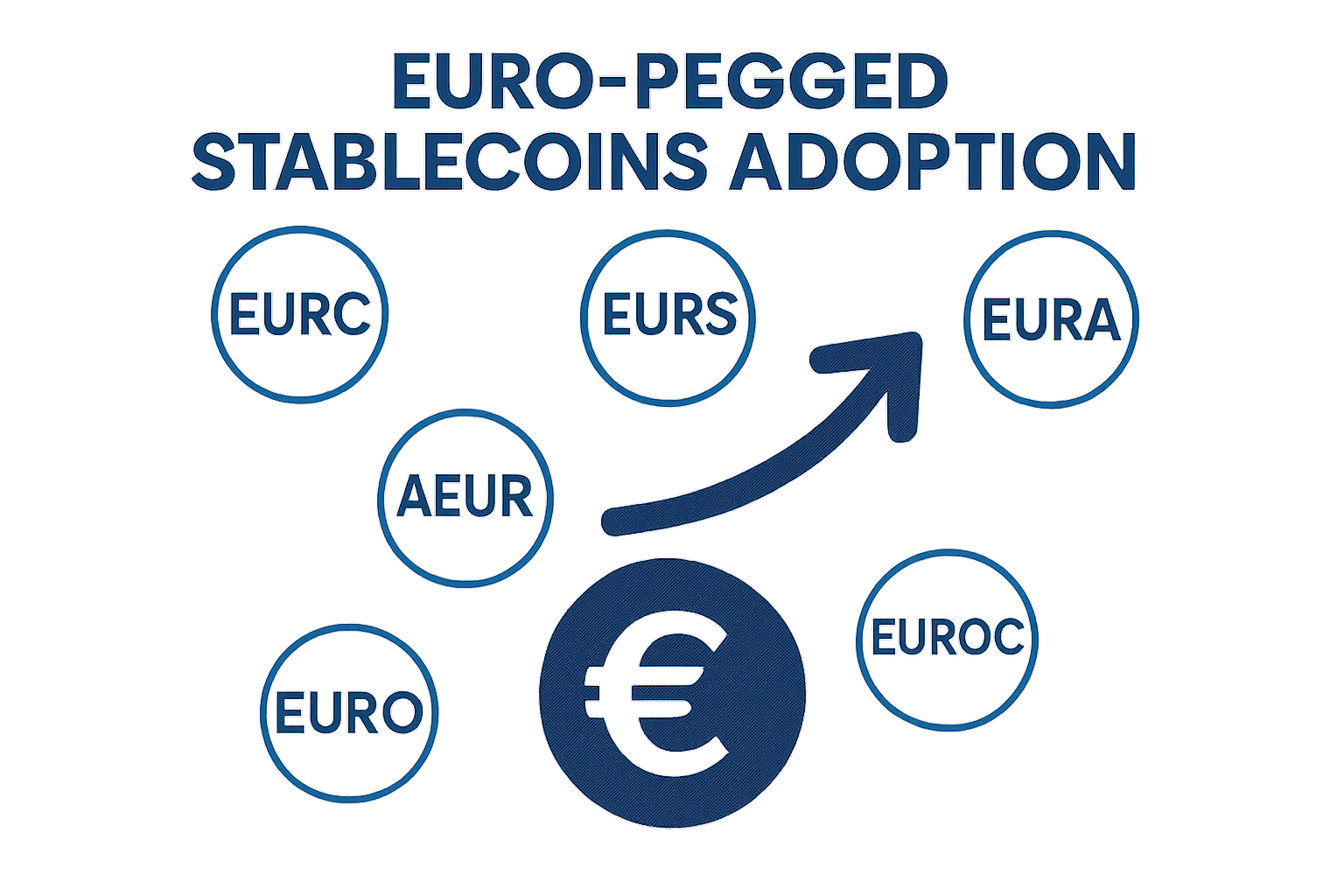
Euro-pegged stablecoins are rapidly gaining traction as regulatory clarity and investor demand for non-USD alternatives intensify across Europe. In 2024, the landscape is defined by a handful of standout EUR stablecoins, each offering unique features for traders, DeFi users, and institutions seeking stability without tethering their portfolios to the US dollar. With MiCA (Markets in Crypto-Assets Regulation) now fully in force, compliance has become a make-or-break factor for euro-backed stablecoins. This guide breaks down the five most relevant options: EURC (Euro Coin by Circle), EURS (STASIS EURO), EURA (Angle Protocol), AEUR (Anchored Coins), and EUROC (Membrane Finance).
Why Euro-Pegged Stablecoins Matter in 2024
For years, USD stablecoins like USDT and USDC dominated crypto trading pairs and DeFi liquidity pools. But as the European market matures, investors are demanding assets that reflect local currency risk and regulatory realities. Euro-pegged stablecoins offer several key advantages:
- Regulatory alignment: MiCA-compliant tokens meet stringent EU standards for transparency, reserves, and consumer protection.
- Diversification: Reduces exposure to USD volatility and broadens your crypto portfolio’s risk profile.
- Integration: Seamless on/off ramps with European banks and fintechs streamline fiat-to-crypto flows.
The following five euro-backed stablecoins lead the pack in adoption, transparency, and MiCA readiness.
Current EUR Stablecoin Prices and Market Sentiment
The latest data shows that Euro Coin (EURC) is currently priced at $1.16, reflecting a modest and $0.0100 ( and 0.0087%) gain over the past 24 hours. This stability underscores why these tokens are increasingly favored in volatile markets.
The Top 5 Euro-Pegged Stablecoins: Features and Compliance
- EURC (Euro Coin by Circle): Issued by Circle, the same company behind USDC, EURC is fully backed 1: 1 by euros held at regulated European financial institutions. Its multi-chain presence (Ethereum, Solana, Avalanche, Base, Stellar) makes it one of the most accessible options for both retail users and DeFi developers.
- EURS (STASIS EURO): Regulated under EU law via STSS Malta Limited and operating across Ethereum, Polygon, and Algorand networks. EURS stands out for frequent reserve audits and transparent reporting, a must-have for institutional adoption.
- EURA (Angle Protocol): A decentralized euro stablecoin that’s fully collateralized and MiCA-ready. Angle Protocol leverages automated market operations to maintain its peg while providing on-chain transparency.
- AEUR (Anchored Coins): Focuses on full collateralization with robust regulatory adherence, favored by entities needing high assurance of asset backing.
- EUROC (Membrane Finance): Prioritizes compliance with both MiCA standards and real-time attestations of reserves; gaining momentum among fintech partners integrating euro-denominated digital assets.
If you’re serious about diversifying your crypto portfolio with non-USD assets or want to understand how these coins stack up against each other on regulation or liquidity metrics, read our deep dive on how euro-pegged stablecoins are changing diversification strategies in 2024.
Euro Coin (EURC) Price Prediction 2026-2031
Professional outlook for EURC price trends, reflecting MiCA compliance, market adoption, and competition among euro-pegged stablecoins.
| Year | Minimum Price | Average Price | Maximum Price | % Change (Avg YoY) | Market Scenario Insights |
|---|---|---|---|---|---|
| 2026 | $1.13 | $1.16 | $1.19 | +0.0% | Stable around peg, minor volatility due to liquidity and regulatory clarity |
| 2027 | $1.11 | $1.15 | $1.20 | -0.9% | Potential slight downward pressure if new euro stablecoins gain traction |
| 2028 | $1.10 | $1.15 | $1.22 | 0.0% | Continued strong MiCA enforcement, DeFi integration supports demand |
| 2029 | $1.09 | $1.15 | $1.23 | 0.0% | Mature market, EURC remains a leading euro stablecoin despite increased competition |
| 2030 | $1.08 | $1.15 | $1.24 | 0.0% | Stable with minor fluctuations, regulation and transparency drive trust |
| 2031 | $1.08 | $1.15 | $1.25 | 0.0% | Widespread adoption in payments and DeFi; peg stability prioritized |
Price Prediction Summary
EURC is expected to maintain a tight trading range around the €1.00 peg, equivalent to the $1.15–$1.16 range, reflecting euro-USD exchange rate trends. Price volatility is minimal due to full-reserve backing, MiCA compliance, and transparent operations. While minor deviations may occur during liquidity events or regulatory shifts, EURC’s price stability will remain its core value proposition through 2031.
Key Factors Affecting Euro Coin Price
- MiCA regulatory compliance and enforcement in the EU
- Full-reserve transparency and monthly attestations by Circle
- Competition from other euro stablecoins (EURS, EURA, agEUR, CEUR, EURT)
- Adoption in payments, DeFi, and cross-border settlements
- Macroeconomic shifts in euro-USD exchange rates
- Liquidity on both centralized and decentralized exchanges
- Integration with major blockchains and financial platforms
Disclaimer: Cryptocurrency price predictions are speculative and based on current market analysis. Actual prices may vary significantly due to market volatility, regulatory changes, and other factors. Always do your own research before making investment decisions.
Navigating Regulation: The Importance of MiCA Compliance
The implementation of MiCA has created a clear framework for what constitutes a compliant stablecoin within the EU, making due diligence easier but also raising the bar for issuers. Among our top picks:
- EURC, EURS, EURA, and EUROC: All explicitly designed or updated to meet MiCA requirements around reserve backing and consumer protections.
- AEUR: While less prominent than Circle or STASIS offerings, AEUR’s focus on full collateralization aligns closely with what regulators expect going forward.
For investors, MiCA compliance isn’t just a box-ticking exercise, it’s the difference between holding a stablecoin that can withstand regulatory scrutiny and one at risk of delisting or liquidity crunches. As exchanges and DeFi protocols increasingly require MiCA-aligned assets, EURC, EURS, EURA, AEUR, and EUROC are positioned to capture the lion’s share of euro-denominated flows in 2024 and beyond.
Comparing Utility: On-Chain Access, Liquidity, and Use Cases
Each of these five euro-pegged stablecoins brings something unique to the table. EURC leads for multi-chain interoperability, ideal for developers building cross-chain DeFi tools. EURS is a favorite among institutions for its robust audit trail. EURA attracts DeFi-native users thanks to its decentralized collateral model. AEUR appeals to risk-averse investors seeking transparent backing. EUROC is rapidly gaining ground in fintech integrations across Europe.
Their expanding availability on major blockchains like Ethereum, Solana, Avalanche, and Polygon ensures ample liquidity and seamless access for traders and dApps alike. This broad accessibility is critical as European trading volumes shift away from USD pairs toward local-currency alternatives.
Euro Stablecoins: Collateral, Audits & Chains Compared
- EURC (Euro Coin by Circle)Collateralization: Fully backed 1:1 by euros in regulated European banks.Audit Frequency: Monthly public attestations by leading audit firms.Chains Supported: Ethereum, Solana, Avalanche, Base, Stellar.

- EURS (STASIS EURO)Collateralization: Fully backed by euro reserves held with licensed financial institutions.Audit Frequency: Daily reserve reports and regular third-party audits.Chains Supported: Ethereum, Polygon, Algorand.

- EURA (Angle Protocol)Collateralization: Overcollateralized with crypto assets; decentralized model.Audit Frequency: Regular smart contract audits and transparent on-chain collateral tracking.Chains Supported: Ethereum, Optimism, Polygon, Arbitrum, Base.
- AEUR (Anchored Coins)Collateralization: Fully backed by euros held in Swiss banks.Audit Frequency: Monthly audits by independent firms.Chains Supported: Ethereum, BNB Smart Chain, Tron, Polygon, Solana.
- EUROC (Membrane Finance)Collateralization: Fully backed 1:1 by euros in European financial institutions.Audit Frequency: Monthly independent attestations.Chains Supported: Ethereum, Polygon, Solana, Arbitrum.

Actionable Strategies for Crypto Investors in 2024
If you’re allocating capital into euro-pegged stablecoins this year:
- Diversify: Don’t rely solely on one issuer, spread exposure across at least two or three MiCA-compliant options to mitigate counterparty risk.
- Check integrations: Prioritize stablecoins with deep liquidity on your preferred exchanges or DeFi protocols; EURC and EURS currently lead here.
- Monitor real-time attestations: Transparency matters, look for issuers publishing up-to-date reserve reports (Circle and STASIS are industry benchmarks).
- Watch regulatory updates: Stay alert for new guidance from EU regulators that could affect listing status or redemption mechanisms.
This pragmatic approach helps ensure your euro-denominated assets remain liquid and secure as the regulatory landscape evolves.
What’s Next? The Road Ahead for Euro Stablecoins
The momentum behind non-USD stablecoins is only accelerating as both retail users and institutions look for currency options that reflect their operating environments. Expect further integration with European banks and payment networks as MiCA matures and more fintechs onboard these digital euros into their platforms.
The bottom line: With prices like $1.16 for Euro Coin (EURC) holding steady amid broader market volatility, and with increasing regulatory clarity, the top five euro-pegged stablecoins offer credible routes to diversification beyond dollar dominance. Whether you’re hedging currency exposure or optimizing DeFi strategies within the EU framework, these assets deserve a place on your radar in 2024.




No comments yet. Be the first to share your thoughts!