

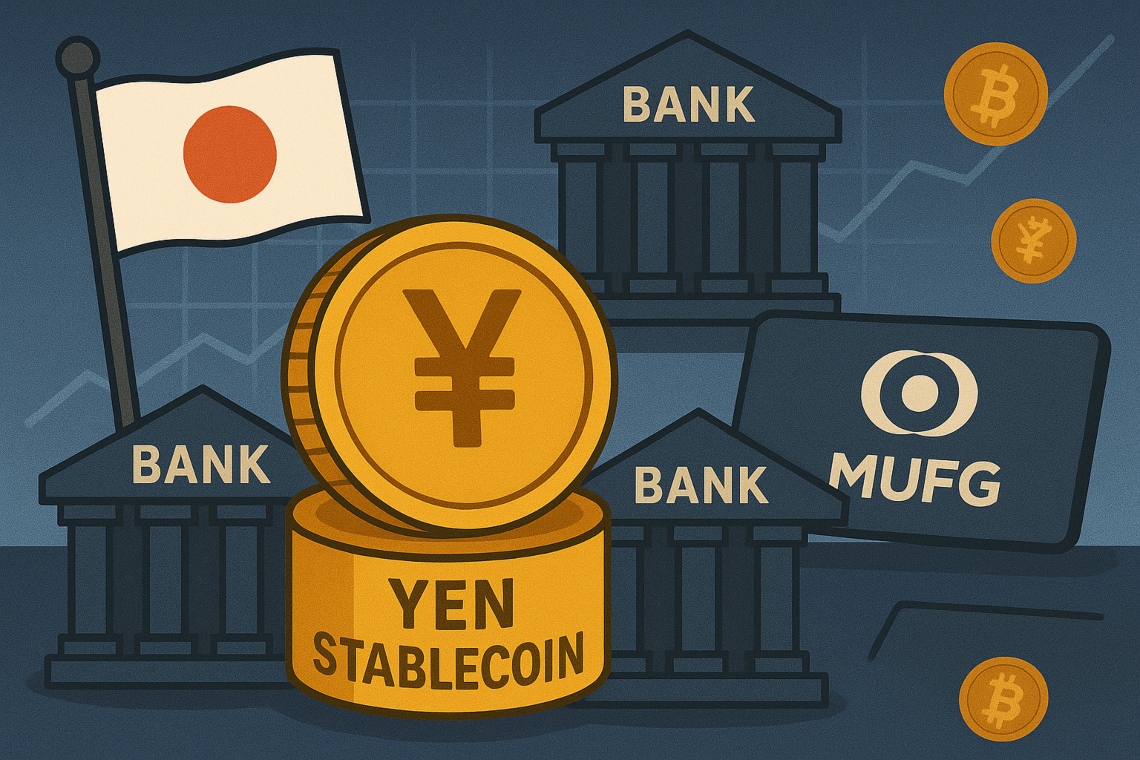
In Japan's tightening grip on crypto innovation, SBI Holdings and Startale Group just inked a pivotal MOU, setting the stage for a regulated Japanese yen stablecoin launch in Q2 2026. This SBI yen stablecoin - a trust-based Type 3 Electronic Payment Instrument - sidesteps the ¥1 million cap on domestic remittances and balances, unlocking fluid JPY stablecoin 2026 flows for payments at home and abroad. Backed by heavyweights like Shinsei Trust and Banking for issuance and SBI VC Trade for trading, it targets a stablecoin market swelling past $300 billion in circulation.

SBI's muscle in finance meets Startale's blockchain prowess, a combo primed to challenge USD dominance in Asia. Investors eyeing non-USD stables will watch closely; this could slash FX volatility for yen-denominated trades while complying with Japan's Payment Services Act amendments.
Partnership Blueprint: Roles and Synergies
SBI Holdings anchors regulatory navigation and distribution channels. As a financial conglomerate with tentacles in banking, securities, and crypto via SBI VC Trade - a licensed Crypto Asset Exchange Service Provider - they ensure seamless circulation. Shinsei Trust and Banking steps in for issuance and redemption, leveraging trust structures to peg 1: 1 to fiat yen reserves.
Startale, the Singapore-rooted Web3 lab, drives the tech stack. Expect robust smart contracts on compliant blockchains, API integrations for wallets and exchanges, and layered security protocols audited to Japanese standards. Their ecosystem push hints at DeFi hooks and cross-chain bridges, potentially amplifying Startale JPY stablecoin utility beyond mere storage.
Core Partner Responsibilities
- SBI Holdings: Oversees regulatory compliance and distribution for the yen stablecoin.

- Startale Group: Leads tech development including smart contracts, APIs, security, compliance systems, and ecosystem expansion.

- Shinsei Trust & Banking: Handles issuance and redemption of the trust-based Type 3 Electronic Payment Instrument.
- SBI VC Trade: Facilitates trading and circulation as a licensed Crypto Asset Exchange Service Provider.

This division of labor minimizes single points of failure. From a quant perspective, the trust model reduces counterparty risk versus pure on-chain reserves, echoing Tether's evolution but tailored to yen liquidity pools.
Feature Set: Compliance Meets Functionality
Dubbed a Type 3 instrument under Japan's framework, this stablecoin inherits exemptions that propel it past prepaid payment tools. No ¥1M balance ceiling means enterprises can park larger yen equivalents on-chain, ideal for treasury ops or remittance corridors like Japan-Philippines flows.
Technical specs prioritize interoperability. Startale's API design promises plug-and-play with enterprise ERPs and fintechs, while compliance modules embed KYC/AML at mint-burn gates. Security? Multi-sig wallets, oracle feeds for peg stability, and regular stress tests against yen volatility spikes.
Fully regulated from day one, this JPY stablecoin bridges TradFi rails to blockchain rails without the wild west baggage.
Cross-border angle shines brightest. In a world of USD hegemony, a compliant JPY option cuts hedging costs for exporters and importers. Picture instant settlements on SBI's network, rivaling Swift's speed minus the fees. For traders, pairing with BTC or ETH on VC Trade could juice JPY-margined perpetuals.
Launch Roadmap: Milestones to Q2 2026
Post-MOU, the timeline accelerates. Q4 2025 targets framework finalization and prototype testing; Q1 2026 ramps audits and beta integrations. Launch window: April-June 2026, hinging on Payment Services Agency nods and system go-lives.
Delays loom if BoJ tweaks stablecoin rules amid yen weakness, but SBI's lobbying clout mitigates that. Early adopters - think salary advances or e-commerce - stand to gain most, as peg integrity hinges on transparent reserves reported quarterly.
Risks and Mitigations: Safeguarding the Peg
Any stablecoin launch carries peg drift hazards, especially with yen's sensitivity to BoJ policy shifts. This regulated Japanese yen stablecoin counters via over-collateralized trust reserves at Shinsei, audited quarterly for 100% yen backing. Startale's oracle integrations pull real-time FX rates, triggering auto-rebalances if deviations exceed 0.5%.
Regulatory flux poses another hurdle; Japan's Payment Services Act evolves fast post-FTX fallout. SBI's insider access - Chairman Kitao's advocacy for crypto-friendly rules - positions them to pivot swiftly. Cybersecurity? Expect bug bounties and penetration tests from firms like Trail of Bits, given Startale's track record with enterprise chains.
Risks vs. Mitigations for SBI-Startale Yen Stablecoin
| Risk | Mitigation |
|---|---|
| Peg drift | Over-collateralized reserves and oracles |
| Regulatory changes | SBI lobbying and oversight of compliance |
| Cyber threats | Audits, bug bounties, and Startale's security systems |
| Liquidity crunch | SBI VC Trade integration for circulation |
Quant models favor this setup: historical USD stable depegs (e. g. , UST) stemmed from under-reserves; yen's lower vol profile - standard deviation ~8% annually vs BTC's 60% - bolsters stability.
Competitive Landscape: JPY Stables Edge
Japan's JPY stablecoin arena heats up. GYEN and DJPY exist but lack scale; market caps hover sub-$10M, hamstrung by exchange limits. This SBI-Startale entrant, with Type 3 exemptions, eyes $1B and circulation via VC Trade listings and remittance partnerships.
Versus USD giants like USDT ($120B and ), it carves a niche in Asia-Pacific trade lanes. Exporters settling in yen avoid 2-3% FX spreads; importers dodge dollar shortages during Fed hikes. For DeFi degens, JPY pairs enable low-vol collateral, slashing liquidation cascades in perps.
A yen stablecoin isn't just parity; it's a hedge against unipolar stablecoin risks, from US sanctions to Tether scrutiny.
Cross-chain ambitions amplify reach. Startale's bridges to Polygon or Solana could feed JPY liquidity into global DEXs, rivaling crvUSD's composability but with fiat-grade compliance.
JPY Stablecoin Advantages
- Exemption from ¥1M Cap: Designed as trust-based Type 3 Electronic Payment Instrument, bypassing Japan's ¥1 million limit on domestic remittances and fund balances.

- Enterprise-Scale Balances: Supports large-scale holdings without per-account restrictions, enabling institutional use via Shinsei Trust & Banking issuance.

- Cross-Border Remittance Efficiency: Facilitates fast, low-cost international payments as regulated yen-pegged asset.

- DeFi Integration Potential: Built with smart contracts and APIs by Startale for seamless blockchain ecosystem compatibility.
- BoJ-Aligned Reserves: Fully regulated reserves compliant with Japanese frameworks, managed by SBI Holdings.

Investor Playbook: Positioning Ahead of Q2 2026
Retail traders: Accumulate via SBI VC Trade betas, targeting 20-50% APY in early liquidity pools. Institutions: Allocate 5-10% portfolio to JPY stables for yen exposure sans bank hassles; pair with JGB ETFs for yield stacking.
Actionable metrics to track: MOU-to-launch slippage (aim <3 months); reserve transparency score (Chainlink-proofed); initial TVL post-launch (>¥50B signals success). Diversification thesis strengthens as non-USD stables hit 5% of total market - up from 1% in 2023.
Startale's tech edge hints at programmable features: yield-bearing variants or flash loans tuned to yen carry trades. SBI's distribution muscle ensures adoption; expect integrations with Line Pay or Rakuten wallets by year-end.
As Q2 2026 nears, this partnership redefines JPY stablecoin viability. In a fragmented stable ecosystem, regulated yen offers precision tooling for Asia's $5T trade bloc, blending stability with blockchain torque. Watch for beta invites - early movers lock in the yield curve.




No comments yet. Be the first to share your thoughts!