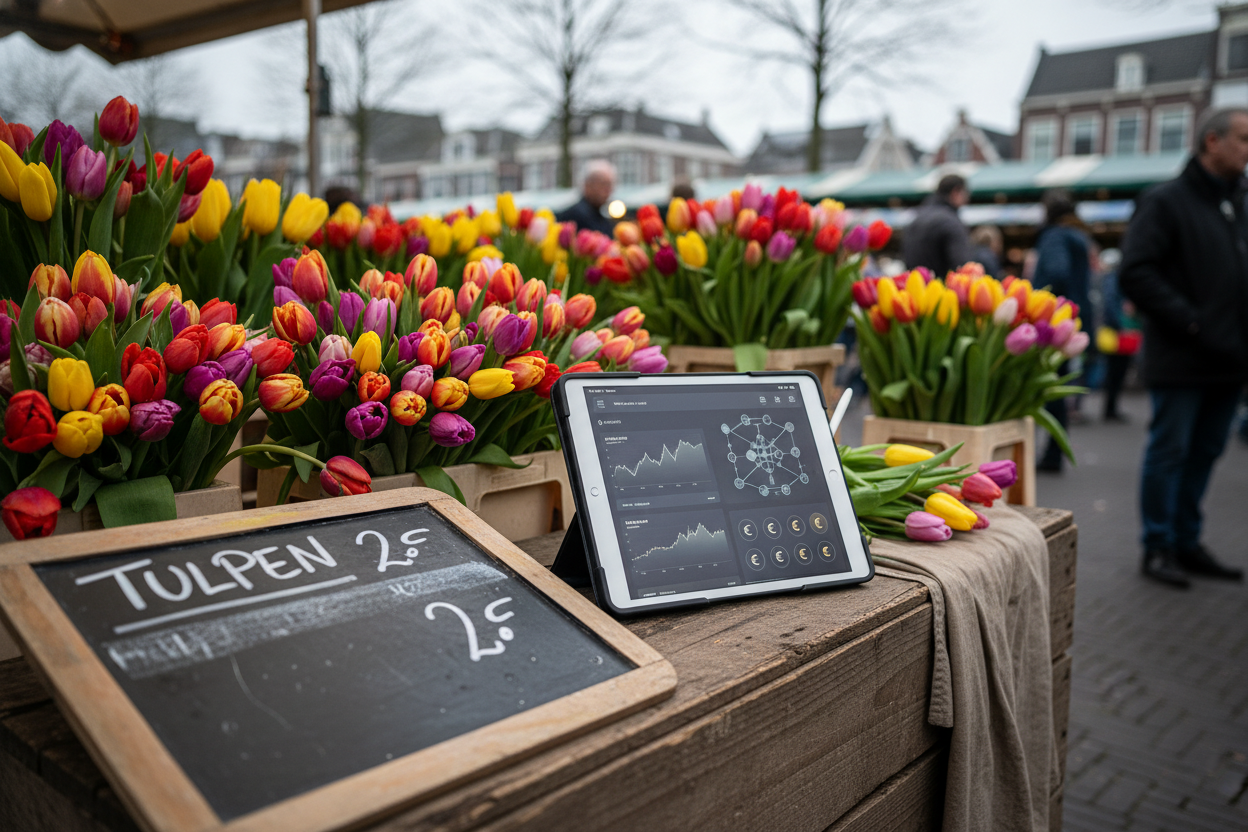
A consortium of 12 major European banks is charging ahead with plans for Qivalis, a MiCA-compliant euro stablecoin set for a second-half 2026 launch. Supervised by the Dutch Central Bank, this EU banks euro stablecoin initiative promises a robust alternative to USD-dominated assets, backed 1: 1 by euro reserves and designed for seamless cross-border payments.
12 Banks in Qivalis Consortium
- ING (Netherlands): Dutch multinational bank headquartered in Amsterdam, leading in retail and wholesale banking across Europe.
- UniCredit (Italy): Pan-European bank headquartered in Milan, operating in 13 major markets with €1.1T+ assets.
- BNP Paribas (France): Europe's largest bank by assets (€2.5T+), headquartered in Paris, strong in investment banking.
- CaixaBank (Spain): Leading Spanish bank headquartered in Valencia, serving 15M+ customers with digital focus.
- Banca Sella (Italy): Innovative Italian bank headquartered in Biella, pioneer in fintech and digital payments.
- Danske Bank (Denmark): Largest Nordic bank headquartered in Copenhagen, focused on Denmark, Sweden, Norway.
- DekaBank (Germany): Cooperative central bank headquartered in Frankfurt, manages €300B+ assets for German cooperatives.
- DZ BANK (Germany): Central institution for 700+ cooperative banks, headquartered in Frankfurt, €500B+ assets.
- KBC (Belgium): Integrated bank-insurance group headquartered in Brussels, strong in Benelux and Central Europe.
- Raiffeisen Bank International (Austria): Leading CEE bank headquartered in Vienna, network in 12 markets.
- SEB (Sweden): Major Nordic bank headquartered in Stockholm, expertise in corporate and investment banking.
- BBVA (Spain): Global tech-driven bank headquartered in Bilbao, joined consortium Feb 2026.
Headquartered in Amsterdam, Qivalis seeks authorization as an Electronic Money Institution under De Nederlandsche Bank (DNB) oversight. This positions it squarely within the EU's Markets in Crypto-Assets Regulation framework, addressing long-standing demands for a regulated EUR stablecoin 2026 that prioritizes sovereignty and stability.
Consortium Powerhouse: From 10 to 12 Banks in Swift Expansion
The project kicked off with 10 banks but swelled to 12 after BBVA joined in February 2026, ditching its solo euro stablecoin ambitions for this collaborative push. Institutions like BNP Paribas, ING, and UniCredit bring deep liquidity pools and regulatory savvy, while regional heavyweights such as Danske Bank and SEB expand geographic reach across the eurozone and beyond. This multi-bank structure mitigates single-point risks inherent in issuer-centric models like USDT or USDC.
BBVA's entry signals growing momentum; the Spanish giant cited synergies in shared infrastructure and MiCA alignment as key drivers. For non-USD stablecoin enthusiasts, this represents a pivotal shift: Europe's banking elite pooling resources to reclaim control over digital euro liquidity.
Earlier coverage highlighted initial formations, but today's 12-bank lineup underscores accelerating adoption.Reserve Mechanics: 40% Deposits, Sovereign Bond Backbone
Qivalis mandates at least 40% of reserves in bank deposits, with the balance in high-quality eurozone sovereign bonds. This composition not only ensures 1: 1 redeemability but also yields modest returns to support operational resilience. Unlike opaque offshore models, full audits and on-chain transparency will verify holdings, fostering trust in this euro pegged stablecoin banks effort.
Technical specs point to ERC-20 compatibility on Ethereum and potential layer-2 deployments, optimizing for speed and cost. In a market where EURT and EURC hover below 1% of total stablecoin supply, Qivalis could capture institutional flows, especially as MiCA deadlines force non-compliant tokens offshore.
Path to Launch: DNB Supervision and Exchange Partnerships
Under Dutch Central Bank guidance, Qivalis navigates EMI licensing with a clear timeline: regulatory nod by late 2026, followed by commercial rollout. Amsterdam's fintech hub status aids talent acquisition and innovation. Current negotiations with crypto exchanges and market makers aim for instant liquidity upon debut.
This Dutch Central Bank stablecoin play counters USD hegemony in DeFi, where over 90% of volume ties to Tether or Circle. For traders eyeing non-USD stablecoins Europe, Qivalis offers hedging against FX volatility and EUR-specific yield strategies. Early integrations could mirror JPM Coin's enterprise focus but scaled for public chains.
Read more on the Dutch oversight details.
Exchanges like Binance and Kraken are reportedly in advanced talks, eyeing Qivalis for primary EUR on-ramp listings. This could bootstrap liquidity, targeting 10-20% of euro stablecoin market share within year one, per analyst projections.
Market Disruption: Challenging USDT and USDC in DeFi Flows
Dollar stablecoins command over 90% of DeFi TVL, but Qivalis flips the script for euro-centric strategies. Traders can now pair it natively against BTC or ETH without FX slippage, unlocking yield farms tailored to ECB policy shifts. In a fragmented non-USD stablecoins Europe space, where Stasis EURS and Tether's EURT limp along with sub-$200M circulations, Qivalis's bank-grade backing could siphon institutional capital from Circle's EURC.
Imagine programmable payments across SEPA rails extended on-chain: remittances from Italy to Germany settle in seconds, not days. For quant desks, this means tighter spreads on EUR/USD pairs via perpetuals, hedging eurozone inflation without offshore exposure.
Qivalis Reserve Composition vs. USDT and USDC
| Stablecoin | Reserve Composition | MiCA Compliance |
|---|---|---|
| Qivalis (EUR) | 40% bank deposits, 60% eurozone sovereign bonds ✅ | Yes (MiCA-compliant) |
| USDT (USD) | Commercial paper heavy (~70-80% historically), cash & equivalents ❌ | No |
| USDC (USD) | Cash equivalents (US Treasuries, repo agreements) ❌ | No |
MiCA's reserve rules favor Qivalis from day one, banning algorithmic pretenders and mandating over-collateralization for fiat-pegged assets. Non-EU issuers face delisting risks post-2026, funneling volume to Amsterdam-regulated alternatives.
Milestones Mapped: From Consortium Formation to H2 2026 Debut
The accelerated pace reflects lessons from Progmat's EURP pilot, where UniCredit tested bank-stable synergies. Qivalis scales that model continent-wide, with DNB's nod hinging on stress-tested redemption mechanisms.
BBVA's pivot underscores a broader trend: solo stablecoin bids yield to consortia for cost-sharing on compliance tech. CaixaBank and KBC add southern and Benelux depth, ensuring reserve diversity beyond French-Dutch cores.
Check our breakdown on MiCA's role in euro stablecoin evolution.
Risks and Resilience: What Could Derail This Euro Peg Push?
No project escapes scrutiny. DNB's EMI bar is high, demanding ironclad cybersecurity and 24/7 monitoring. A eurozone sovereign debt wobble could pressure bond yields, though the 40% deposit buffer cushions volatility. Smart contract audits from top firms will be non-negotiable, given Ronin-scale exploits still haunting the space.
Yet, the consortium's scale mitigates these: collective AUM exceeds €5 trillion, dwarfing Circle's $50B. Redemption queues? Unlikely, with bank deposits enabling instant fiat off-ramps. For skeptics, Qivalis isn't just another token; it's Europe's riposte to Silicon Valley's dollar grip, blending TradFi rails with blockchain primitives.
Adoption hinges on integrations. Expect first movers in Aave or Uniswap V4 pools, followed by enterprise pilots from DZ BANK's corporate clients. As ECB digital euro trials fade into background, Qivalis fills the void with private-sector agility.
Portfolio managers take note: allocate 5-10% to regulated EUR stablecoin 2026 for diversification. In a multi-polar crypto order, euro liquidity isn't optional; it's essential for navigating post-MiCA realities.




No comments yet. Be the first to share your thoughts!