
The GENIUS Act framework explained
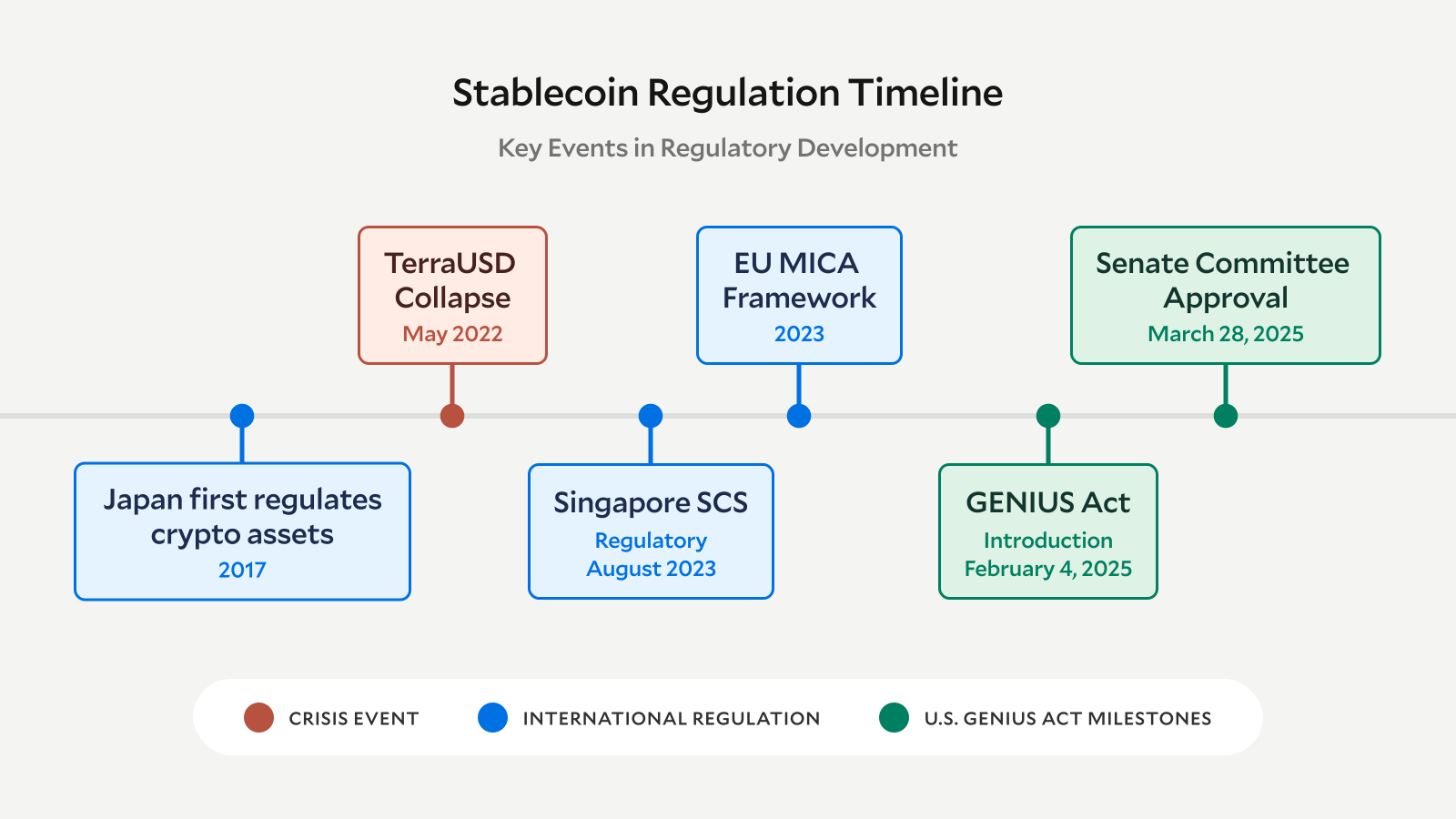
The GENIUS Act, enacted on July 18, 2025, establishes the first comprehensive federal regulatory framework for payment stablecoins in the United States. The legislation directs the Department of the Treasury and federal banking agencies to implement rules that govern the issuance and backing of stablecoins used for payments. This shift moves stablecoins from a largely unregulated crypto-native experiment into a core component of the regulated financial infrastructure. As noted in the 2026 Stablecoin Momentum Report, the industry has crossed a threshold where stablecoins are now integral to broader financial systems, necessitating this new legal structure.
The 1:1 Reserve Requirement
A central pillar of the GENIUS Act is the strict reserve requirement. Issuers must maintain reserves backing outstanding payment stablecoins on at least a one-to-one basis. These reserves are not arbitrary; they must consist of specified assets, including US dollars, Federal Reserve notes, and funds held at insured depository institutions or other regulated entities. This requirement is designed to ensure that stablecoins remain fully backed and liquid, reducing the risk of runs or insolvency that plagued earlier iterations of the market.
The Permitted Issuer Model
The Act generally prohibits any person other than a "permitted payment stablecoin issuer" from issuing a payment stablecoin in the United States. This creates a licensing regime where only entities meeting specific capital, operational, and compliance standards can issue stablecoins. The proposed rules, detailed in the Federal Register and Treasury announcements, outline the rigorous application process for these permits. This model aims to bring stability and accountability to the stablecoin market by limiting issuance to regulated financial institutions.
The implementation of these rules marks a significant change in how stablecoins are regulated. By enforcing strict reserve requirements and limiting issuance to permitted entities, the GENIUS Act seeks to protect consumers and maintain financial stability. The ongoing rulemaking process, as tracked by the OCC and Treasury, will further refine these standards, ensuring that the framework adapts to the evolving landscape of digital payments.
Comparing global stablecoin rules
The US GENIUS Act establishes a distinct federal framework for payment stablecoins, prioritizing reserve quality and federal oversight. This approach diverges significantly from the European Union’s Markets in Crypto-Assets (MiCA) regulation and the United Kingdom’s evolving stablecoin regime. Understanding these structural differences is essential for issuers managing cross-border compliance.
The GENIUS Act mandates that permitted payment stablecoin issuers maintain reserves backing outstanding tokens on at least a one-to-one basis. These reserves are restricted to high-quality liquid assets, such as US dollars, federal reserve notes, and funds held at regulated institutions. This strict reserve definition aims to minimize counterparty risk and ensure immediate redeemability, distinguishing US rules from jurisdictions that may allow broader asset classes.
The European Union’s MiCA regulation, by contrast, applies a unified license across member states, requiring issuers to hold reserves in a diversified portfolio of high-quality assets. While MiCA also enforces 1:1 backing, it allows for a wider range of cash and cash-equivalent instruments, including deposits in credit institutions. The UK is finalizing its own framework, which generally aligns with MiCA’s reserve standards but tailors licensing to the Financial Conduct Authority (FCA), creating potential for regulatory arbitrage between London and Brussels.
The table below outlines the core differences in reserve requirements, licensing authorities, and cross-border recognition for these major jurisdictions.
| Jurisdiction | Reserve Requirement | Licensing Body | Cross-Border Recognition |
|---|---|---|---|
| US (GENIUS Act) | 1:1 backing with US dollars, Fed notes, or regulated deposits | Federal Reserve & OCC | Limited; primarily domestic focus |
| EU (MiCA) | 1:1 backing with diversified high-quality liquid assets | National Competent Authorities | Full passporting across EU member states |
| UK | 1:1 backing with cash and cash equivalents | Financial Conduct Authority (FCA) | Limited; pending equivalence deals |
These regulatory divergences create compliance complexities for global issuers. A stablecoin issued under MiCA may not automatically qualify for the strict reserve definitions required by the GENIUS Act, potentially limiting its usability in US markets. Conversely, US-compliant stablecoins may face additional scrutiny or licensing hurdles in the EU and UK if their reserve structures do not align with local asset eligibility criteria.
Market Impact of Compliant Stablecoins
The GENIUS Act, enacted in July 2025, has fundamentally altered the stablecoin landscape by mandating strict reserve requirements for permitted payment stablecoins. Issuers are now required to back outstanding tokens on a one-to-one basis with highly liquid, low-risk assets, primarily U.S. dollars and short-term U.S. Treasuries [src-7]. This regulatory shift has transformed stablecoins from speculative crypto assets into direct drivers of demand for U.S. government debt.

As compliance costs rise, market share is consolidating among established issuers who manage the regulatory framework efficiently. Smaller, non-compliant tokens are losing liquidity as users and institutions migrate to regulated alternatives. This consolidation is accelerating the adoption of stablecoins as core financial infrastructure, moving them further away from crypto-native experimentation toward mainstream payment utility [src-6].
Cross-border payments and monetary policy
The GENIUS Act has shifted stablecoins from experimental assets to core financial infrastructure, fundamentally altering cross-border settlement dynamics. By mandating that permitted issuers maintain reserves on a one-to-one basis with specified high-quality assets, the legislation has accelerated the velocity of global payments while tightening the link between crypto liquidity and traditional banking systems [src-serp-8].
This integration is reshaping monetary policy transmission. As regulated stablecoins settle transactions instantly, they are increasing the demand for short-term U.S. debt instruments held in reserve pools. This creates a direct conduit where crypto market liquidity flows into Treasury markets, potentially amplifying the Federal Reserve's ability to influence interest rates through broader financial channels.
The Federal Reserve views this development as a structural change in the payment ecosystem. The speed of settlement reduces friction in international trade, but it also requires regulators to monitor reserve composition closely to ensure that sudden shifts in stablecoin adoption do not destabilize short-term funding markets.
Compliance checklist for issuers
Achieving compliance under the GENIUS Act requires issuers to manage a strict regulatory framework established by the Office of the Comptroller of the Currency (OCC). The Act, enacted on July 18, 2025, prohibits any person other than a permitted payment stablecoin issuer from issuing a payment stablecoin in the United States [src-serp-1]. Issuers must align their operational workflows with the Notice of Proposed Rulemaking to avoid enforcement actions.
The compliance process is best approached as a sequential workflow. Each step builds on the previous one, ensuring that reserve assets, licensing, and reporting requirements are met before the stablecoin is launched or maintained.
Issuers must ensure that reserves backing outstanding stablecoins are held on a one-to-one basis. Permissible assets are limited to US dollars, Federal Reserve notes, and funds held at certain insured or regulated institutions. Any deviation from these specified assets requires immediate adjustment to maintain compliance.
Before issuing any stablecoin, the issuer must obtain a permit from the OCC. This application requires detailed disclosures regarding corporate structure, governance, and the technical architecture of the stablecoin system. The OCC reviews these submissions to ensure the issuer meets the statutory requirements for a permitted payment stablecoin issuer.
Compliance is not a one-time event. Issuers must conduct regular, independent audits of their reserve assets. These audits verify that the total value of reserves matches the total value of outstanding stablecoins. Results must be reported to the OCC and made publicly available to maintain market confidence.

Issuers must implement robust mechanisms to protect consumers. This includes clear disclosure of fees, risks, and the legal status of the stablecoin. Protocols for handling redemptions and resolving disputes must be documented and tested to ensure they meet the standards set forth in the GENIUS Act.
Regulatory frameworks evolve. Issuers must maintain a dedicated compliance team to track changes in OCC guidance and broader legislative developments. Proactive monitoring ensures that the issuer can adapt quickly to new requirements without disrupting operations or violating the law.
| Requirement | Status | Source |
|---|---|---|
| Reserve Assets | One-to-one backing required | GENIUS Act |
| Issuer Permit | OCC licensing mandatory | OCC Bulletin 2026-3 |
| Public Disclosure | Audit results required | Federal Register |
For issuers operating in this space, understanding the broader market context is also essential. Regulatory clarity often influences asset valuation and market liquidity. Tracking the performance of major stablecoin-pegged assets can provide insight into market sentiment and compliance impact.
Adhering to these steps ensures that issuers not only meet the legal requirements of the GENIUS Act but also build a foundation of trust and stability in the digital asset ecosystem.
No comments yet. Be the first to share your thoughts!