Stablecoins in 2026
Choosing the right stablecoin depends on your specific needs: liquidity, regulatory comfort, or payment integration. The landscape has shifted from pure speculation to utility-driven selection. We evaluated USDT, USDC, and PYUSD based on three practical criteria: reserve transparency, exchange liquidity depth, and real-world payment rails.
USDT remains the default for traders needing immediate access to the deepest order books. USDC appeals to those prioritizing regulated reserves and native conversion on major platforms. PYUSD targets users embedded in the PayPal ecosystem, offering seamless on-ramps for everyday transactions. This guide compares these three to help you pick the right tool for your strategy.
5 USDT vs. USDC vs. PYUSD: Best Stablecoin Strategies for 2026
The best stablecoin for 2026 depends on your specific risk tolerance and yield requirements, as USDT, USDC, and PYUSD offer distinct tradeoffs in liquidity, regulatory backing, and institutional access. This section breaks down the practical strategies for deploying each asset, comparing their fee structures, redemption mechanisms, and compliance landscapes to help you choose the right tool for your portfolio.
1. USDT for high-frequency trading liquidity
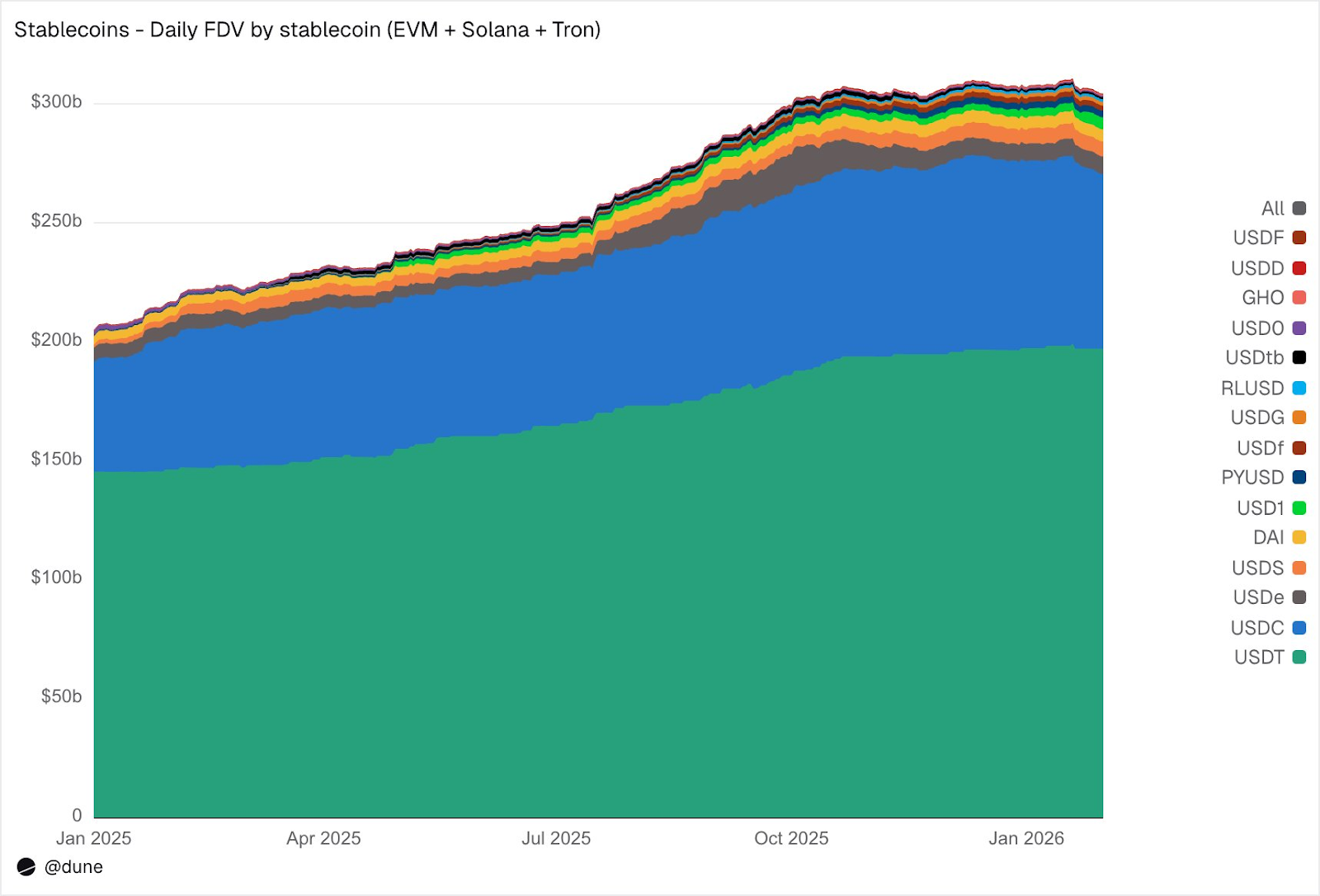
Tether (USDT) remains the dominant liquidity provider for high-frequency trading due to its deep order book depth across major centralized and decentralized exchanges. The sheer volume ensures minimal slippage for large, rapid executions. As noted by PANews, over 90% of stablecoin flow moves through these venues, making USDT the pragmatic choice for traders prioritizing speed and fill rates over regulatory nuance.

2. USDC for regulated institutional compliance
USD Coin (USDC) serves as the standard for institutions requiring strict regulatory alignment and transparent reserve audits. Its issuance by Circle ensures compliance with US financial regulations, offering peace of mind for corporate treasuries and institutional investors. Unlike less transparent alternatives, USDC provides a clear paper trail, making it the preferred vehicle for compliant capital deployment and institutional-grade settlements.

3. PYUSD for PayPal ecosystem integration
PayPal USD (PYUSD) offers seamless integration for millions of users within the PayPal and Venmo ecosystems, bridging traditional finance and crypto effortlessly. This accessibility allows for instant transfers between bank accounts and stablecoin wallets without complex exchanges. For users already embedded in PayPal’s network, PYUSD eliminates friction, enabling direct payments, peer-to-peer transfers, and easy onboarding into the broader stablecoin economy.

4. Yield optimization via USDC money markets
Deploying USDC into money market funds or DeFi protocols can generate yield tied to short-term US Treasury rates, offering a passive income stream. This strategy transforms idle stablecoins into productive assets, leveraging the interest-bearing nature of the underlying reserves. By utilizing platforms like Aave or Compound, users can earn competitive returns while maintaining dollar-peg stability, effectively hedging against inflation without exiting the stablecoin ecosystem.

5. Diversification across USDT and USDC reserves
Spreading holdings between USDT and USDC mitigates counterparty risk by avoiding overexposure to a single issuer’s reserve structure. This diversification strategy balances USDT’s superior liquidity with USDC’s regulatory transparency, creating a robust portfolio resilient to issuer-specific shocks. By allocating capital across both assets, investors ensure operational continuity and access to diverse liquidity pools, safeguarding their stablecoin positions against isolated market disruptions or regulatory changes.
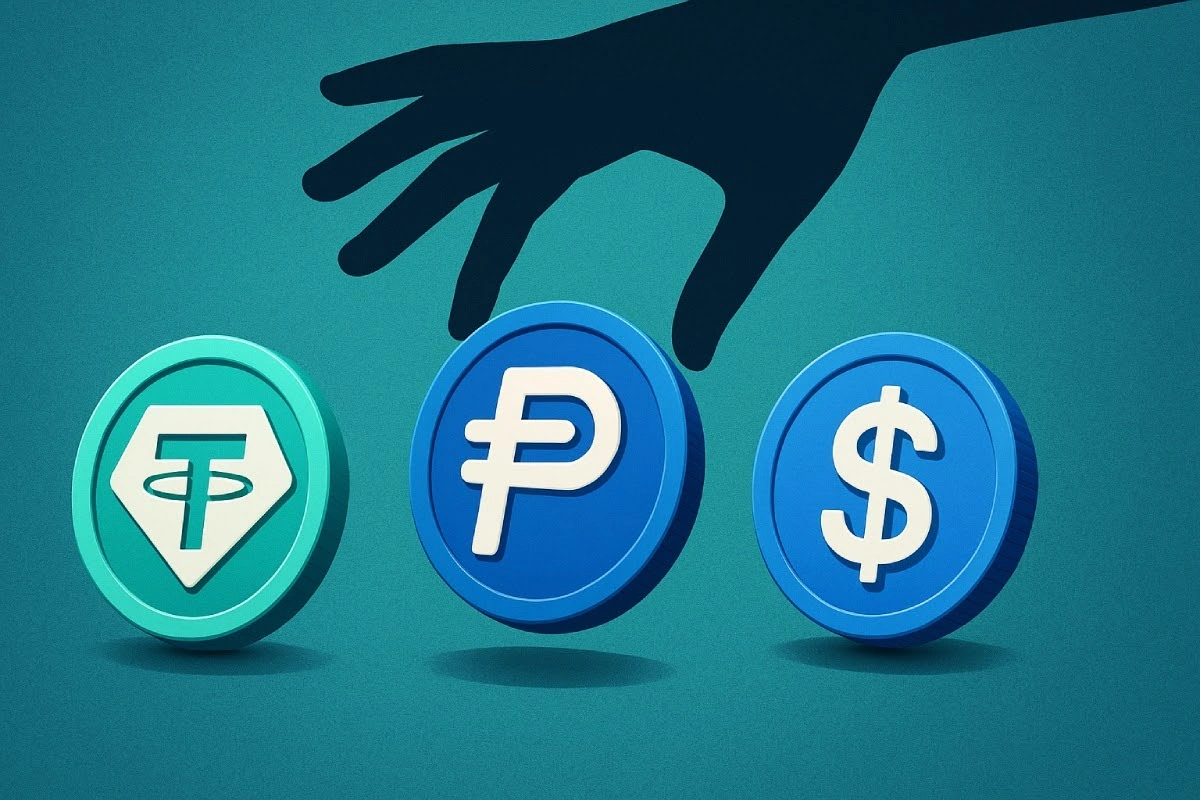
Pick the right stablecoin fit
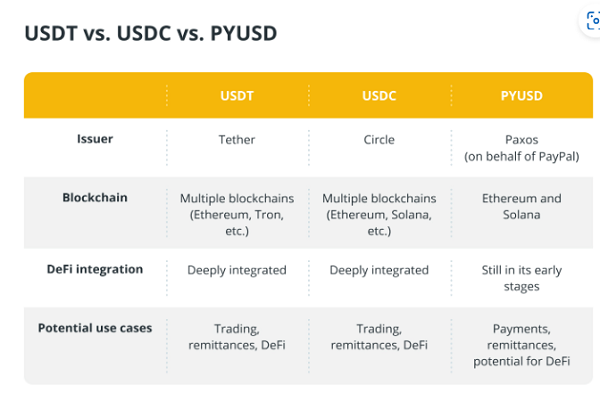
Choosing between USDT, USDC, and PYUSD comes down to three practical factors: where you store it, what you use it for, and how much regulatory comfort you need. Each token serves a different niche, and using the wrong one for your specific goal can lead to unnecessary friction or hidden fees.
The decision framework below breaks down the tradeoffs by common use case.
If you are actively trading or moving large volumes between exchanges, Tether (USDT) remains the industry standard. It has the deepest order books and the widest availability across global crypto markets. While USDC is growing, USDT still dominates spot trading volume, making it the most efficient choice for arbitrage or high-frequency moves.
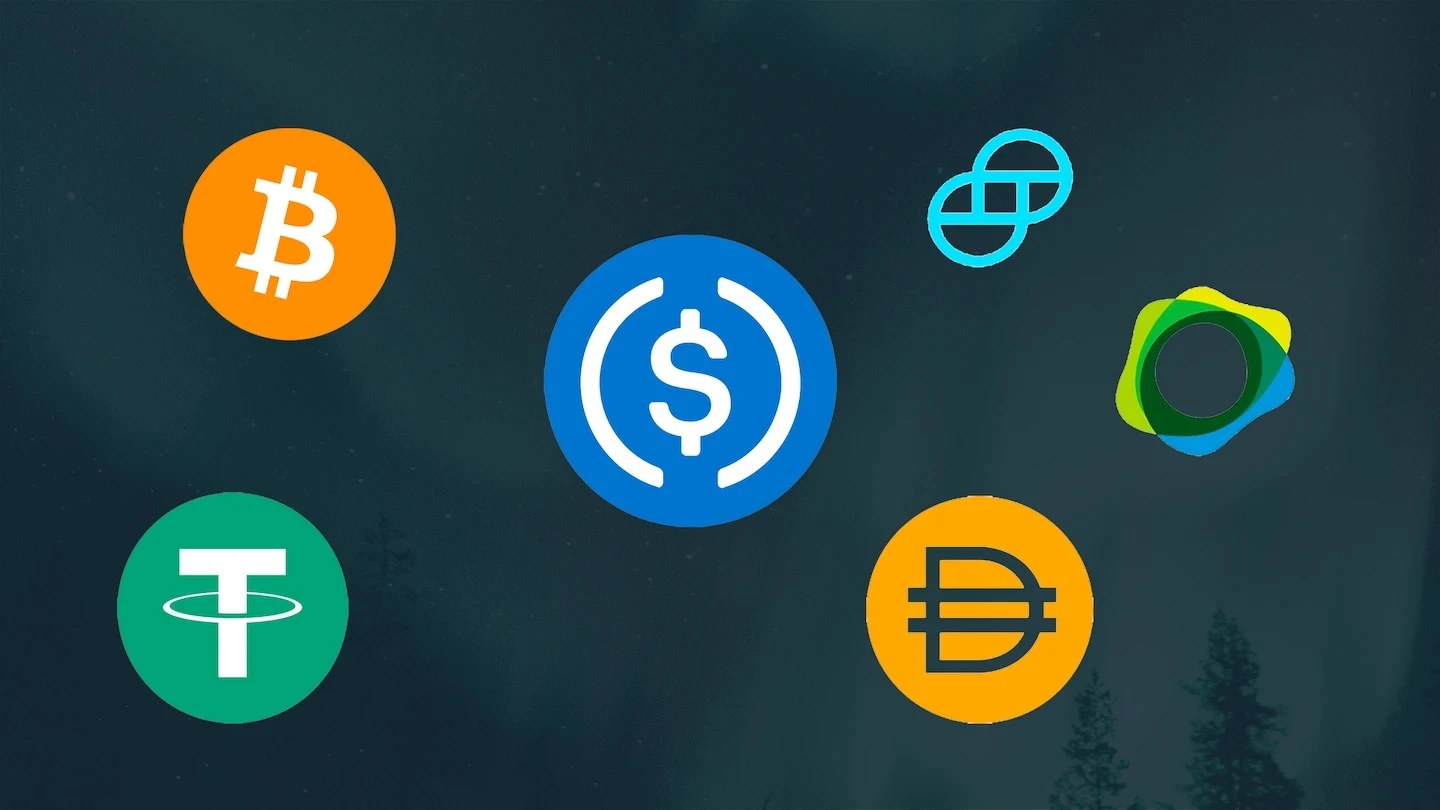
For long-term holds or yield-bearing accounts, USDC is generally the safer bet. It is issued by Circle, a regulated financial institution that publishes monthly reserve attestations. This transparency aligns with stricter compliance standards in the US and EU, making it the preferred choice for institutional investors and risk-averse retail users who want to avoid the regulatory ambiguity that has occasionally surrounded Tether.
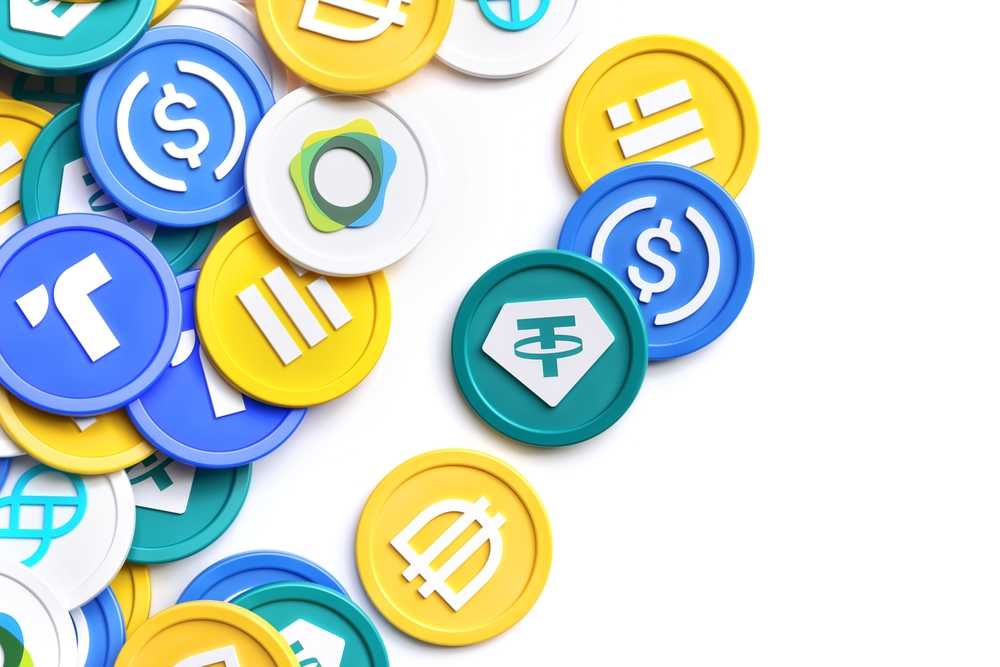
If your financial life is heavily integrated with the PayPal ecosystem, PYUSD offers the smoothest experience. It allows for seamless transfers between your PayPal and Venmo accounts and can be easily converted back to a traditional bank account. This makes it ideal for everyday commerce and remittances, though it lacks the broad decentralized finance (DeFi) utility of USDC or USDT.
| Feature | USDT | USDC | PYUSD |
|---|---|---|---|
| Best For | Trading & Global Liquidity | Savings & Compliance | PayPal Payments |
| Reserve Transparency | Quarterly Attestations | Monthly Attestations | Monthly Attestations |
| DeFi Integration | Highest | High | Limited |
| Regulatory Status | Subject to scrutiny | Fully Compliant | Compliant (PayPal) |



As an Amazon Associate, we may earn from qualifying purchases.
5 USDT vs. USDC vs. PYUSD: Stablecoin Strategies for 2026
What is the best stablecoin in 2026?
There is no single winner; the best choice depends entirely on your trading or payment needs. For global liquidity and the deepest exchange pairs, USDT remains the standard. For regulated reserves and native conversion on major platforms like Coinbase, USDC offers superior transparency. If you rely on PayPal’s payment rails, PYUSD provides the most seamless integration for everyday commerce.
Is USDT or USDC safer for holding?
USDC is generally considered safer for long-term holding due to its regulatory compliance and monthly attestation reports from independent auditors. USDT has faced historical scrutiny regarding its reserve composition, though it now publishes regular reports. For enterprise payments and institutional custody, USDC’s regulatory clarity often outweighs USDT’s higher trading volume.
Can I use PYUSD for global crypto trading?
PYUSD is primarily designed for payments and transfers within the PayPal ecosystem rather than high-frequency crypto trading. While it is pegged 1:1 to the US dollar, its liquidity on decentralized exchanges is significantly lower than USDT or USDC. Use PYUSD for consumer transactions, but stick to USDT or USDC for active trading across multiple exchanges.
How do stablecoin fees compare in 2026?
Transaction fees depend more on the underlying blockchain than the stablecoin issuer. On Ethereum, all three tokens incur similar gas costs. However, USDT and USDC are widely supported on low-cost networks like Solana and Tron, making them cheaper for cross-border transfers. PYUSD is currently optimized for PayPal’s internal ledger, minimizing fees for users staying within that ecosystem.
No comments yet. Be the first to share your thoughts!